
Two iconic regional styles, one big decision. New York-style and Detroit-style pizzas both have devoted followings, but they're built on completely different principles. The debate between them rarely gets resolved quickly. The good news? Amici's East Coast Pizzeria serves both of these styles across the Bay Area, so no one has to commit permanently.
This blog breaks down the key differences between New York-style and Detroit-style pizza, from crust and toppings to texture and serving style, and which option suits which occasion.
Two Cities, Two Very Different Pizza Philosophies
New York-style pizza grew out of Italian-American immigrant neighborhoods in the early 20th century. It was built to feed people quickly and conveniently, with large, foldable slices that became part of the city's pace and practicality.
Detroit-style pizza came together decades later, shaped by Sicilian baking traditions and Detroit’s steel-pan culture. Bakers used rectangular automotive parts trays to create thick, crispy-edged pizzas that became a regional favorite.
Both pizza styles reflect where they came from, and that’s exactly what makes the comparison so interesting.
The Crust: Thin and Foldable vs. Thick and Airy
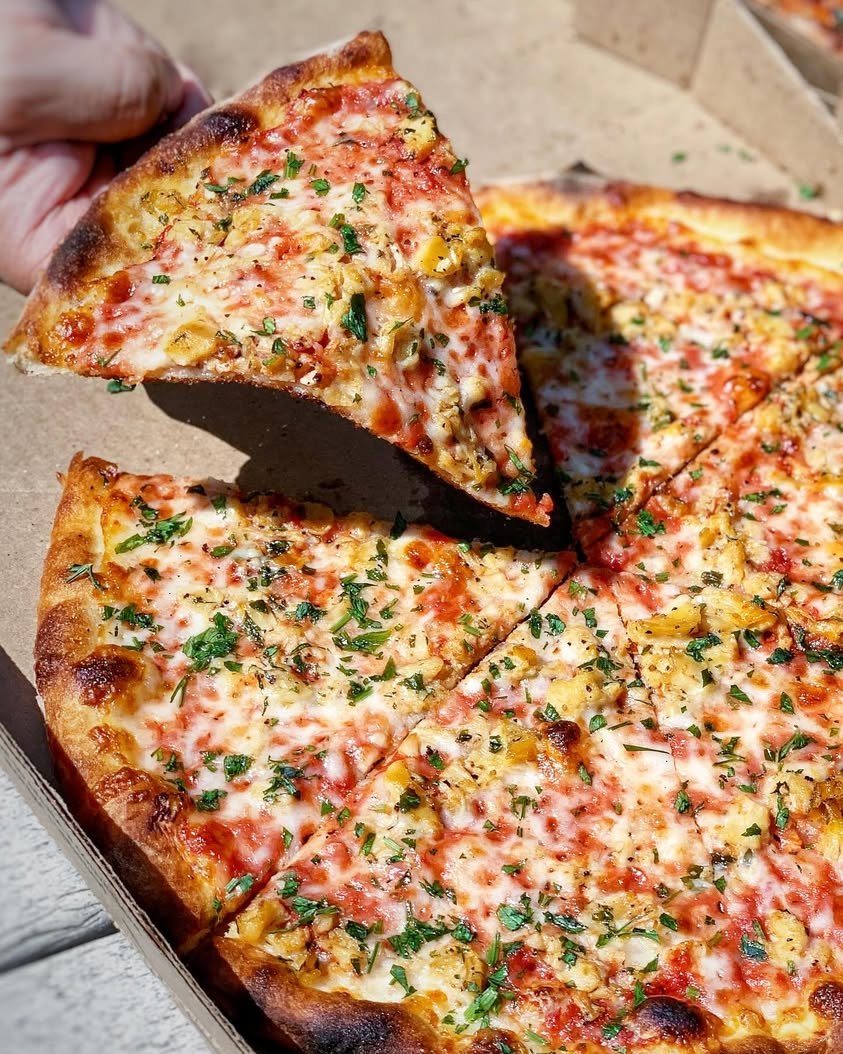
New York-style pizza starts with hand-tossed dough stretched into a wide, thin base. The crust stays sturdy enough to hold toppings but flexible enough to hold down the middle. It’s light, crisp, slightly chewy, and easy to eat on the go.
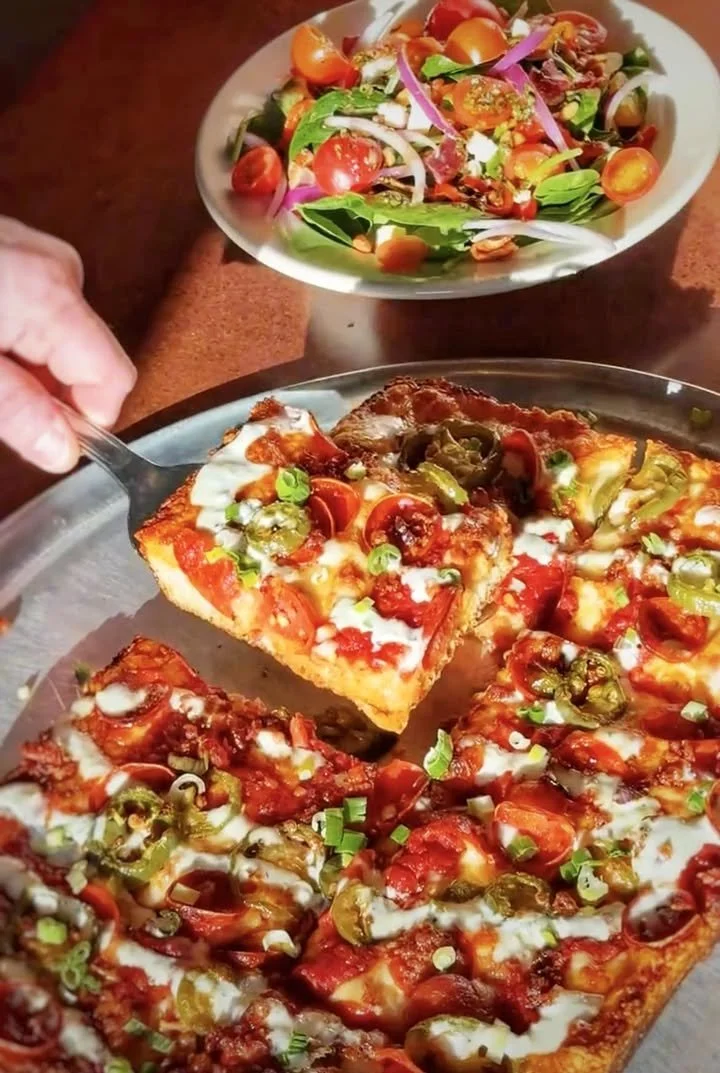
Detroit-style pizza is baked in deep, oiled steel pans, creating a thick, airy interior with a crispy, caramelized bottom crust. The oil contact during baking gives Detroit pizza its signature crunch and rich texture.
That textural difference completely changes the eating experience, which is why many pizza fans strongly prefer one style over the other.
Shape, Size, and How It's Served
New York-style pies are round and cut into large triangular slices. They’re ideal for casual meals, office lunches, and group orders where everyone grabs a slice quickly.
Detroit-style pizzas are rectangular and cut into squares. Each piece feels denser and more filling, making them a strong option for smaller groups or comfort-food-style meals.
Both styles work well for sharing, but they create very different group dining experiences.
Sauce, Cheese, and Topping Order
New York-style pizza follows the classic structure: sauce first, mozzarella second, toppings last. This layering keeps the crust balanced while allowing the toppings room to char slightly in the oven.
Detroit-style flips the whole process. Cheese and toppings go directly onto the dough, while the sauce is added on top in signature "red top" stripes. It's also made with cheese lining the edges around the pan. That crispy cheese crust is one of the biggest reasons Detroit-style pizza stands out from traditional pizza styles.
Style at a Glance: New York-Style vs Detroit Style Pizza
Both New York and Detroit-style pizzas have distinct personalities. A side-by-side look makes the differences easier to weigh before ordering:
| Feature | New York-Style | Detroit-Style |
|---|---|---|
| Crust | Thin, hand-tossed, foldable | Thick, airy, pan-baked |
| Shape | Round, triangular slices | Rectangular, square cuts |
| Sauce placement | Under the cheese | On top (red top style) |
| Gluten-free option at Amici’s | Yes | No |
| Best for | Crowds, quick meals | Hearty appetites, comfort food |
Knowing these basics makes ordering much easier, especially for mixed groups deciding between pizza styles.
Which Style Travels Better for Delivery and Takeout
New York-style pizza travels well for quick meals, but thinner slices can soften slightly during longer delivery times. Detroit-style pizza tends to hold its structure better because of its thicker crust and pan-baked texture.
For group orders or office lunches, choose Amici’s San Rafael locations for dine-in and Mountain View for takeout.
No matter which style you choose, both pizzas are built to hold up beautifully for takeout, delivery, and sharing. At Amici’s, we’ve spent over 35 years perfecting the art of pizza delivery, and we know how to deliver high-quality meals consistently.
Choosing the Right Style for Your Occasion
New York-style pizza works best for larger groups, office lunches, and casual family pizza nights because it’s easy to portion and universally familiar.
Detroit-style pizza is a stronger choice when the goal is something richer, crispier, and more indulgent. It feels more filling and comfort-focused.
For groups with mixed preferences, ordering both styles is often the smartest move. One important note: gluten-free crust is available for New York-style pizzas only. Detroit-style pizza is not available gluten-free.
Trying both side by side is honestly the easiest way to settle the debate for yourself. Explore the menu, compare both pizzas, and find your favorite for dine-in, pickup, or pizza delivery.
FAQs
Which style is better for large group orders?
Detroit's square cuts make sharing easy, and portions go further for bigger groups. New York-style works well for mixed preferences since per-slice ordering is simple and familiar.
Is Detroit-style pizza available gluten-free?
No. Gluten-free crust is only available for New York-style pizza at Amici's. Detroit-style is not offered in a gluten-free version.
Which style is more filling?
Detroit's thick crust is more substantial per piece. New York-style satisfies through volume — the slices are large, but the bite is lighter.
Can I order both styles in one order?
Yes. Ordering both is possible at most Amici's locations and is a solid option for groups with different preferences.
Both Styles, One Place to Order
New York-style and Detroit-style pizza each bring something completely different to the table. The right choice depends on the occasion, the group, and the kind of pizza experience you want.
At Amici’s East Coast Pizzeria, you can enjoy both styles across the Bay Area without choosing sides permanently. Visit your nearest Amici’s, compare both pizzas, and find your favorite for dine-in, pickup, or pizza delivery.