
Detroit-style pizza has a reputation that precedes it: thick crust, crispy edges, caramelized cheese, and sauce layered on top. Most people recognize the look instantly, but very few know what actually goes into making it.
From the pan and dough hydration to the layering technique and baking process, every step behind Detroit-style pizza is intentional. In this blog, we take a closer look at how Detroit-style pizza is made and why the process matters so much to the final bite.
What Makes Detroit-Style Pizza Different From the Start
Detroit-style pizza was born in Motor City in the 1940s, baked in rectangular steel pans originally used in auto factories. That industrial origin shaped the pizza's entire structure. The dough is thick and airy, the cheese reaches every edge, and the final pizza comes out rectangular with a crisp, cheesy crust.
Compared to New York-style, the process is completely different. New York-style pizza is round, hand-tossed, thin, and layered sauce-first. Detroit-style pizza follows its own system from the very beginning.
That structural difference is exactly why Detroit-style pizza has become such a favorite among comfort-food lovers and pizza fans looking for something heartier.
The Dough: Building That Signature Thick Base
Detroit-style dough typically uses a high-hydration process, meaning the dough contains more water than standard pizza dough. At Amici’s, we use the same delicious dough as our New York-style pizza (cold-proofed for a couple of days).
Unlike New York-style pizza, there's no tossing or stretching here. The dough gets pressed directly into the pan, fills the corners, and rises in place. That resting period helps create the thick, pillowy texture Detroit-style pizza is known for.
The result is a crust that feels light inside while staying crisp and structured on the outside.
The Pan: Why It's the Real Secret Weapon
The pan isn't just part of the process; it’s one of the main reasons Detroit-style pizza tastes the way it does.
Traditional Detroit-style pizzas are baked in seasoned rectangular steel pans that conduct heat differently than standard baking trays. The pan is coated in oil before the dough goes in, allowing the crust to crisp and fry slightly while baking.
That combination of oil, steel, and high heat creates the signature crunchy bottom and caramelized edges that define authentic Detroit-style pizza.
It’s also why Detroit-style pizza is difficult to replicate at home using standard baking pans or cookie sheets.
Cheese First, Sauce Last: The Layering Logic
This is where Detroit-style pizza breaks from almost every traditional pizza method.
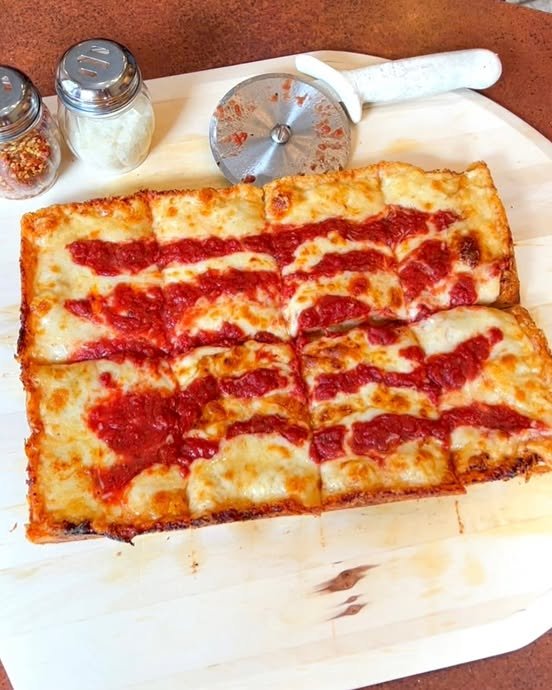
Traditionally, Detroit pies have Wisconsin brick cheese placed directly on the dough and spread edge-to-edge, rather than layered with sauce first. At Amici’s, our signature Detroit pies are lined with a layer of provolone and parmesan to create the traditional crispy, cheesy crust, topped with a combination of romano & whole-milk mozzarella cheeses. As it bakes, the cheese melts into those hot edges and caramelizes against the hot steel pan, creating crispy, lacy edges known as the frico effect.
The sauce is added on top after baking in signature red stripes. Keeping the sauce on top helps preserve the crispy texture underneath instead of softening the crust during baking.
That layering method is one of the biggest reasons Detroit-style pizza feels so different from standard pizza styles.
How Amici's Brings Detroit-Style to the Bay Area
Amici's East Coast Pizzeria follows the same foundational Detroit-style pizza-making process while adapting it for Bay Area delivery, takeout, and dine-in service. From the thick crust and crispy cheese edges to the sauce-on-top finish, the goal is consistency across every location and order.
Why Detroit-Style Pizza Works So Well for Delivery and Takeout
Detroit-style pizza holds its structure especially well during delivery and takeout because of its thick crust and pan-baked texture. The slices stay crisp longer and don’t soften as quickly in transit. Whether ordering from the San Mateo location or picking up in Menlo Park, the thick crust, caramelized edges, and layered build stay consistent across every order.
Browsing the menu online is the easiest way to explore current Detroit-style options and find the nearest Bay Area location.
FAQs
Is Detroit-style pizza available gluten-free?
No. Amici's does not offer a gluten-free crust for Detroit-style pizza. Gluten-free crust is available for New York-style pies only.
What's the difference between Detroit-style and Chicago deep dish?
Chicago deep-dish pizza uses a round pan, a layered buttery crust, and thick baked-in tomato sauce. Detroit-style pizza uses a rectangular steel pan, airy dough, brick cheese, and sauce added on top after baking.
Can Detroit-style pizza be ordered half-baked?
No. The half-baked option at Amici's is not available for Detroit-style pizza.
The Method Is the Point
Detroit-style pizza earns its reputation through process. The pan, the dough hydration, the cheese-first layering, the post-bake sauce. Each step serves a specific purpose, and changing any of them results in a completely different pizza experience.
At Amici’s, Detroit-style pizza is built around that same attention to texture, structure, and flavor.
Ready to taste the real thing? Order Detroit-style pizza from your nearest Amici's location for delivery or pickup.